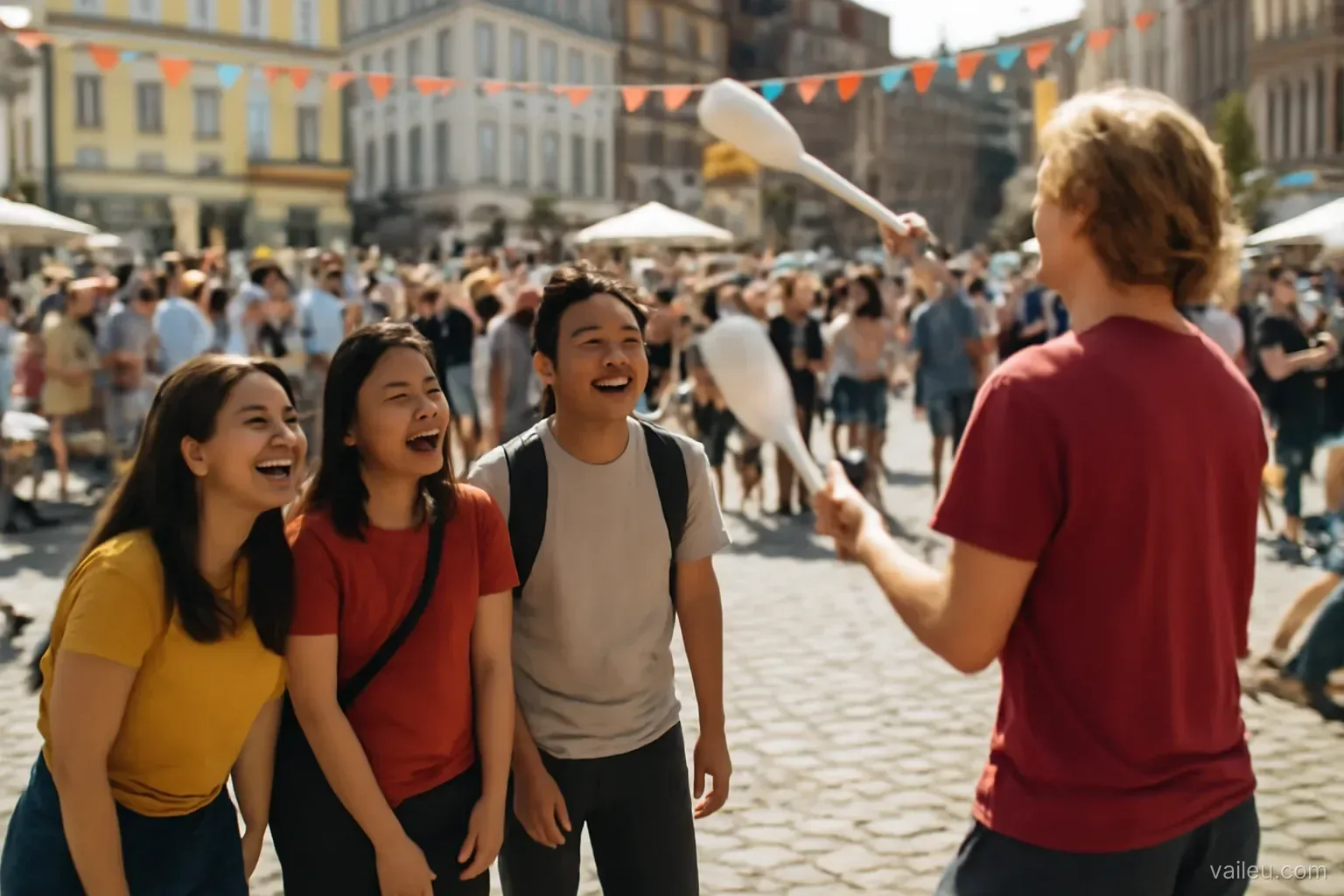
In Europe, art does not live only in theatres and museums. Every summer, many cities turn into giant stages: theatre, music, film and dance festivals, jugglers on squares, museums open until midnight and historic buildings welcoming visitors for free. What makes this valuable is that most of these events are designed so anyone can take part, regardless of budget or knowledge of the arts.
For Vietnamese readers used to village festivals, fairs and walking streets, European festival culture feels both familiar and new. This article introduces common types of festival and how to enjoy them politely.
Why Europe has so many arts festivals
After the Second World War, many major festivals were founded to heal divisions and bring culture closer to people. Local governments treat culture as a public service, funding festivals as they fund libraries. Festivals also bring economic benefits, attracting visitors and bringing cities to life.
Another factor is a tradition of public space: squares, parks and riverbanks are seen as belonging to everyone, places where gathering and performing feel natural.
Theatre festivals: Edinburgh and Avignon
Every August, the Scottish capital hosts a cluster of festivals, including a famous fringe with an open spirit: almost anyone can register to perform. The result is thousands of comedy, theatre, dance, circus and music shows across the city, from grand theatres to tiny pubs. Many well-known comedians and artists started there.
In southern France, the Avignon festival in July turns the old city into a stage, with the main programme in the courtyard of the Palace of the Popes and hundreds of fringe shows on every street.
Music day: anyone can play
The music festival held on the summer solstice began in France and has spread to many countries. The idea is simple: for one day, everyone, professional or amateur, is invited to play in the streets, and performances are usually free. You might hear a rock band outside a bakery, a choir in a churchyard and students playing jazz on a corner.
Museum nights and heritage days
On museum nights, many European museums stay open late, often free or cheap, with special events such as live music, light art and guided tours. They are wonderful for young people and families.
European Heritage Days, held in autumn in many countries, open historic buildings that are usually closed: town halls, mansions, government offices, old factories and monasteries. Entry is often free, sometimes with advance registration. Walking into a seat of power you normally see only from outside is a thrill and reflects a spirit of openness.
Film festivals
Europe hosts famous film festivals such as Cannes, Venice and Berlin. The biggest are mostly for professionals, but some offer public screenings, Berlin in particular. Hundreds of smaller festivals for short films, documentaries and Asian cinema run throughout the year. In summer, many cities show films outdoors in parks and squares, sometimes for free. Vietnamese films have also been shown at European festivals.
Street performers
Walking through European city centres, you meet violinists in underpasses, singers by rivers, magicians on squares and living statues standing still for hours. Many cities regulate where and when performers can play, and some require permits to keep order and quality.
- If you stop and enjoy it, a little money in the hat or case is a way to say thanks.
- Photographing a living statue usually calls for a small tip as a matter of courtesy.
- When a crowd forms, leave space for people to pass.
- Buying a CD from a street musician supports them directly.
Art on the walls
Many European cities have large murals created legally, often as part of neighbourhood renewal projects. Berlin, Lisbon, Bristol and others offer walking tours of street art. It is important to distinguish permitted murals from graffiti on other people’s property, which is punished in most countries.
Traditional festivals
Alongside modern arts festivals, Europe has traditional festivals tied to religion, harvests and local history: carnivals before Lent in Venice, Cologne and Nice; grape harvest festivals; medieval re-enactments in old towns; and Christmas markets in German-speaking and Central European countries. Each has its own customs, so learn a little beforehand to join in the right spirit.
Joining in politely and safely
- Check the official programme and book early for popular shows.
- Arrive early and bring water, a hat or a light raincoat depending on the weather.
- Keep your wallet and phone safe; crowds attract pickpockets.
- Agree on a meeting point if you are in a group.
- Respect rules on alcohol, glass bottles and banned items.
- Take your rubbish with you and sort it if there are separate bins.
- Keep your voice down during performances, even outdoors.
Saving money at festivals
Big festivals push up accommodation prices. Book early or stay in a nearby town and take the train in. Combine a few ticketed shows with many free events. Many festivals offer student or last-minute tickets. Bring snacks rather than relying only on festival stalls.
Volunteering behind the scenes
Most European festivals depend on armies of volunteers who check tickets, guide audiences, help artists and keep venues tidy. In return, volunteers often receive free entry to some shows, a meal and a lively international circle of friends. For Vietnamese students in Europe, volunteering is one of the easiest ways to practise a language, understand local habits and add real experience to a CV.
Vietnamese communities and European festivals
In cities with large Vietnamese communities, multicultural festivals often feature Vietnamese food stalls, lion dances, áo dài and traditional music. It is a way for the community to share its culture and connect with local people, and visitors are usually delighted to discover it.
What to remember
European festival culture rests on a simple belief: art belongs to everyone, and public space is where it is shared. Let yourself wander into a concert on a square, laugh along with a street performer or step into a historic building on its open day. Those moments are often what stays with you longest after a trip.
Frequently asked questions
Are European arts festivals expensive?
Many shows require tickets, but there are also many free activities on streets, squares and in parks. You can combine a few ticketed shows with plenty of free events.
Should I give money to street performers?
If you stop, watch and enjoy it, putting a little in the hat or case is a polite thank-you. It is not compulsory, but it is their main income.
What are European Heritage Days?
Occasions when many countries open historic buildings, including places normally closed, often for free, on certain days of the year.
What should I keep in mind at crowded festivals?
Watch your belongings, agree on a meeting point, bring water, follow organisers’ rules and take your rubbish with you.
How can I find festival dates?
Check official festival websites, city tourist offices and local cultural calendars; dates change each year.