Europe is working to move from a take-make-waste lifestyle to a circular economy, in which products are designed to last, repaired, reused and finally recycled so materials return to production. This shows up in everyday life: bottle return machines in supermarkets, repair cafés in neighbourhoods, weekend flea markets and rules that encourage repair. For anyone raised with habits of thrift, repairing and making do, many of these practices feel familiar and are easy to adopt straight away.
From linear to circular
The linear economic model follows a straight line: extract resources, manufacture, consume and discard. It generates enormous waste and puts pressure on natural resources. The circular economy tries to close the loop by keeping products and materials in use for as long as possible.
The EU has placed the circular economy at the heart of its environmental strategy, with action plans on sustainable product design, less packaging, more recycling and stronger consumer rights. Member states implement them in their own ways, but the direction is clear.
- Designing durable products that are easy to dismantle and repair.
- Extending product life through repair and maintenance.
- Reusing, sharing, renting and reselling second-hand goods.
- Recycling materials when products can no longer be used.
- Reducing waste from the moment of purchase.
Repair cafés: fixing things, meeting people
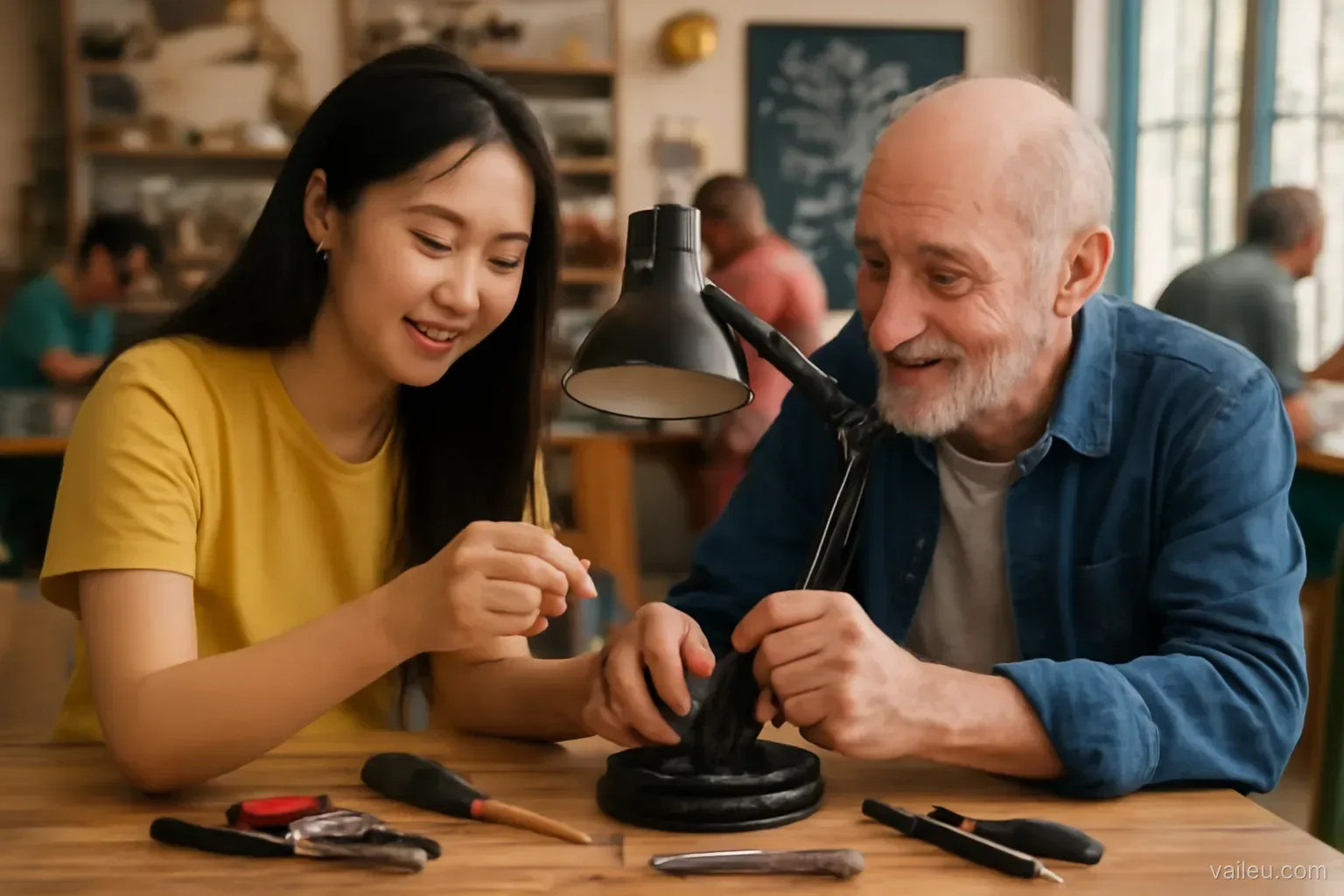
One of Europe’s most charming initiatives is the repair café. It is not a café as such but a regular community gathering, often in libraries, community centres or schools. People bring broken items such as coffee machines, desk lamps, hairdryers, bicycles and torn clothes, and skilled volunteers sit with them and guide them through the repair.
The idea began in the Netherlands and has spread to many countries. Besides reducing waste, these events connect older people with practical skills to younger people eager to learn and make everyone more confident with the objects around them. International students are welcome too, fixing things while practising the language.
The right to repair
Many of us have seen a phone or washing machine fail because of one small part, only to find repair expensive or parts unavailable, and end up buying new. To change this, the EU has been adopting rules in the direction of a right to repair: requiring manufacturers to supply spare parts for a period, provide repair information and design certain product groups to be repairable.
The aim is to make repair an easier and more sensible choice than replacement. Some countries also run schemes that help cover repair costs. Details vary by product group and country, so check when the need arises.
Bottle deposits: recycling as a habit
In many European countries, when you buy drinks in eligible plastic bottles, cans or glass bottles, you pay a small deposit. Return the empties to an automatic machine in the supermarket and you receive a voucher to deduct from your next purchase. These systems achieve very high return rates and keep streets cleaner.
For students, collecting bottles to return is a small way to save money. You may also notice people collecting abandoned bottles to claim deposits. In some cities, people leave bottles beside bins rather than inside them so that those who need the deposit can take them easily.
- Look for the deposit symbol on bottle and can labels.
- Keep containers intact so machines can read the barcode.
- Return them to machines in supermarkets or shops.
- Use the refund voucher when paying.
Second-hand: from thrift to style
In Europe, buying second-hand is not only for those saving money but also a choice for many young people who care about the environment and personal style. Charity shops, vintage stores, flea markets, resale apps and neighbourhood giveaway groups are all popular.
The start and end of the academic year are seasons of exchange: departing students sell or give away pots, bedding and furniture, and newcomers can equip a whole room at low cost. Many halls of residence have shared giveaway corners.
Sorting waste: every place is different
Waste sorting rules vary between countries and even cities. There are often separate bins for paper, plastic and metal packaging, glass by colour, organic waste and residual waste. Batteries, electronics and chemicals must go to special collection points.
Look for your city’s guidance, usually on the local authority website or posted in your building’s bin area. Sorting correctly makes recycling effective and avoids reminders or, in some places, fines.
Low-waste habits for students
- Carry a cloth bag, water bottle and container when going out.
- Buy household items and winter clothes second-hand.
- Repair before discarding, and look for a local repair café.
- Return bottles for deposits.
- Cook just enough and use leftovers creatively to cut food waste.
- Before leaving, pass on or sell your belongings to new students.
Old traditions meet new trends
Many cultures have long traditions of thrift: wearing clothes until they wear out, taking broken things to the local repairer and washing jars for reuse. Neighbourhood repair stalls and scrap collectors who buy used bottles and paper were familiar sights in many cities. Seen today, that was a circular economy in practice.
What Europe is doing is systematising such habits through policy, infrastructure and product design. Newcomers who already share these habits have an advantage: combine familiar thrift with the systems of your new home and you are already a green citizen.
Businesses joining the loop
Companies across Europe are experimenting with circular models: clothing brands that take back worn garments, furniture makers offering refurbishment, electronics sold with longer warranties and modular designs, and rental services for tools and equipment that people use only occasionally. Not every experiment succeeds, but together they show that sustainability can also be a source of innovation and new jobs.
Closing the circle
The circular economy is not only a matter for governments and companies. It begins with small daily choices: mending a lamp, buying a second-hand coat, returning a bottle. When many people do the same, these small choices add up to real change for the environment and for the communities we live in.
Frequently asked questions
What is the circular economy?
An economic model that keeps materials and products in use as long as possible through durable design, repair, reuse and recycling, instead of the linear take, make, use and throw away approach.
What is a repair café?
A community event where skilled volunteers help people repair broken items such as electrical appliances, bicycles and clothes, usually free or for a voluntary donation.
How do bottle deposit systems work?
When you buy drinks in eligible bottles or cans, you pay a small deposit. Return the empties to a machine or shop and you get the deposit back. Many European countries use such systems.
What is the right to repair?
A set of rules making it easier for consumers to repair products: available spare parts, repair information and products designed to be repairable. The EU has been adopting rules in this direction.
How can students start living with less waste?
Buy second-hand, carry your own bag and bottle, sort waste correctly, return bottles for deposits, repair rather than replace and cook just enough to cut food waste.