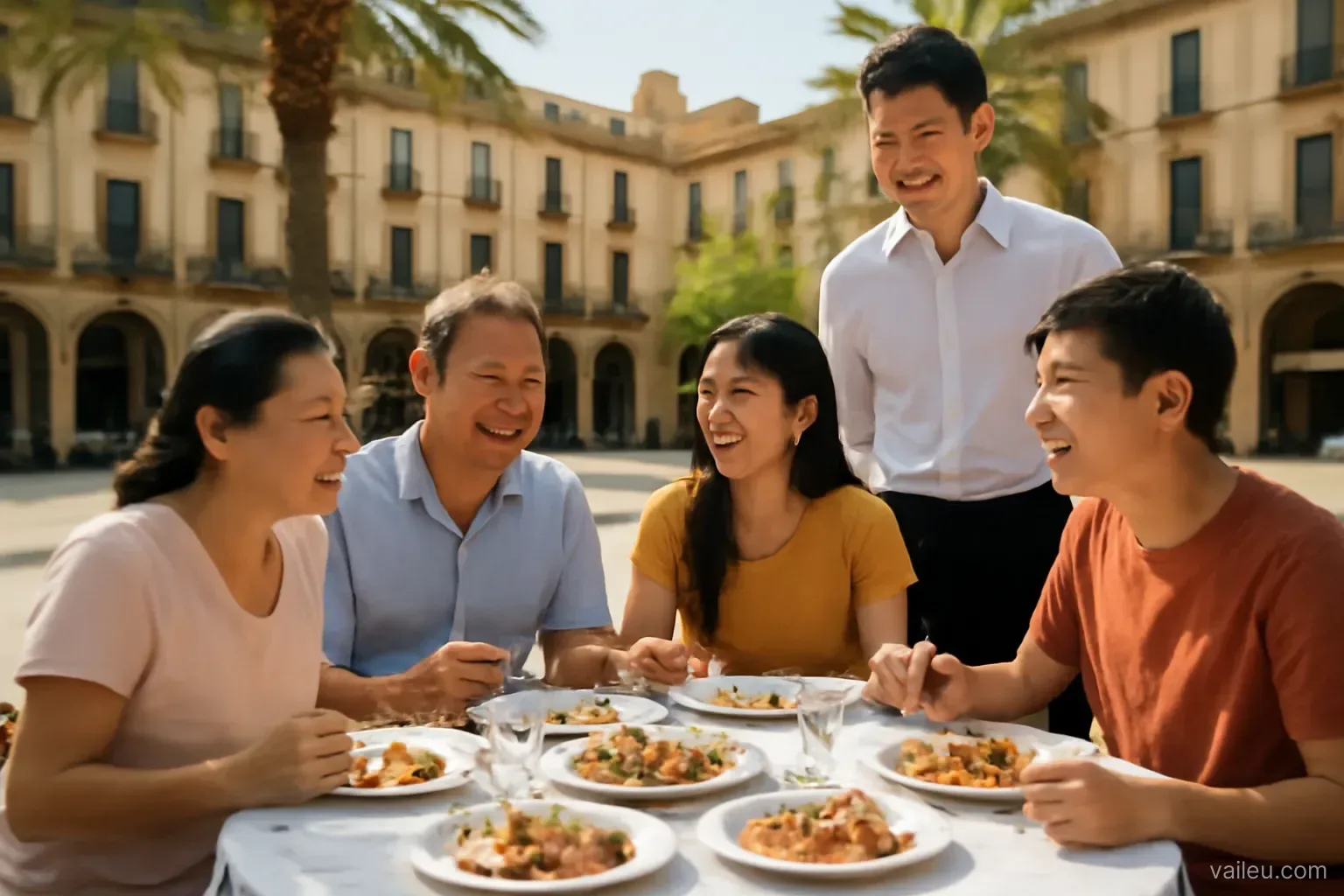
Meals in Europe usually last longer than in Vietnam, with individual plates, knives and forks, quiet conversation and no rush. Waiters do not bring the bill until you ask. Tipping varies by country: in some places service is included in the price, in others people round up or leave a little when pleased, and in some hardly anyone tips. A few general principles will make you confident at any table, from a simple café to dinner at a friend’s home.
Meals are for conversation
In many European countries, especially France, Italy, Spain and Portugal, meals are important occasions for meeting and talking. A weekend lunch or dinner with friends can last two or three hours across several courses. Eating hurriedly, leaving the moment you finish or staring at your phone is considered disrespectful to your companions.
The French gastronomic meal has even been recognised by UNESCO as intangible cultural heritage, not just for the food but for the ritual of the meal as a way of bringing people together.
Knife and fork: two styles
There are two main styles. The Continental style: knife in the right hand, fork in the left throughout, cutting and eating without switching, fork tines down. The American style, less common in Europe: cut, put the knife down and switch the fork to the right hand to eat. Both are acceptable, but the Continental style is more common.
- Work from the outside in if there are several sets of cutlery for several courses.
- Place knife and fork parallel across the plate when finished; crossed or on either side means you are pausing.
- Bread is usually torn into small pieces by hand, not bitten from the loaf; in France, bread placed directly on the tablecloth is normal.
- Spaghetti: twirl it with a fork; in Italy you neither use a spoon to help nor cut the pasta.
- Hands on the table (wrists at the edge) in many continental countries; elbows, no.
Differences from a Vietnamese table
- Individual plates: no eating from shared central dishes; communal dishes have serving spoons or tongs.
- Do not serve others: a sign of care in Vietnam, but it may embarrass Europeans.
- Eat quietly: slurping, loud chewing and talking with a full mouth are considered rude.
- No toothpicks at the table; use the bathroom if needed.
- Wait until everyone is served or the host invites you to start.
- Do not call loudly for the waiter; catch their eye or raise a hand gently.
Ordering and service
In sit-down restaurants you usually wait to be seated unless a sign says otherwise. The waiter brings menus and asks for drinks first, then food. Service is often slower than in Vietnam because the meal is meant to be relaxing. Bottled water usually costs extra; in some countries you can ask for free tap water, in others it is less common.
When you want to leave, ask for the bill. Waiters will not bring it unprompted, as that would seem like rushing you out.
Splitting the bill
In many northern and central European countries, everyone paying their own share is normal, and waiters readily split bills. In southern Europe, friends often split evenly or take turns treating. Fighting to pay, as in Vietnam, is rare; Europeans simply ask “how shall we split it?”. If you want to treat, say so at the start.
Tipping: the general principle
Unlike in the United States, in most of Europe waiting staff have a base wage that does not depend on tips, and a tip is an optional thank-you rather than an obligation. Before tipping, check the bill: if a service charge is already listed, you need not add more unless you were especially pleased.
Tipping by country
- France: service is usually included in prices; people leave small change if pleased.
- Germany and Austria: rounding up or adding a little is common; when paying, tell the waiter the total you wish to pay rather than leaving money on the table.
- Italy: many restaurants charge a per-person cover for table and bread, which is not a tip; anything extra is optional.
- Spain and Portugal: leaving a little change is enough; nobody expects more.
- Britain and Ireland: restaurants may add an optional service charge; if not, tipping when satisfied is common; in pubs, ordering at the bar usually involves no tip.
- The Nordic countries: tips are not expected, though rounding up when pleased is welcome.
- Central and Eastern Europe: rounding up or adding a little is fairly common.
These are general principles; habits vary by city and type of venue. When unsure, watch locals or ask politely.
Invited to dinner at home
- Arrive on time or a few minutes late, never early.
- Bring a small gift: flowers, chocolates, pastries or wine if appropriate.
- Ask whether to take off your shoes.
- Wait for the host to seat you and invite you to start.
- Compliment the food sincerely; asking how it was made is a good conversation starter.
- Do not leave straight after eating; stay and chat.
- Send a thank-you message the next day.
When you are the host
If you invite European friends for Vietnamese food, give each person their own bowl and plate, chopsticks and also knife and fork if they are not used to chopsticks. Briefly explain the dishes and how to eat them, such as rolling summer rolls or dipping in fish sauce. Ask in advance about allergies, vegetarian diets or avoiding pork. Europeans often love Vietnamese food and appreciate being invited home.
Drinking at the table
Wine or beer often accompanies meals in many countries, but moderation is the norm. Pressuring others to drink, constant toasting or bottoms-up drinking as at some Vietnamese drinking sessions is rare. When clinking glasses, looking the other person in the eye is polite in many countries. Declining alcohol is perfectly normal; a simple “no, thank you” is enough.
What to remember
European table manners are not about showing off but about letting everyone feel at ease together. Eat slowly, talk, respect each person’s portion, and tip when pleased according to local custom. These small things help you enjoy one of Europe’s great pleasures: long meals with friends.
Frequently asked questions
Is tipping mandatory in Europe?
Usually not. In many countries service is included or staff wages do not depend on tips; people round up or leave a little when satisfied. Check whether the bill already includes service.
Why don’t waiters bring the bill straight away?
Bringing the bill before it is requested is seen as rushing guests out. You need to ask for it when you want to leave.
What is coperto in Italy?
A per-person cover charge for table and bread at many Italian restaurants, usually listed on the menu. It is not a tip.
Should I serve food onto other people’s plates as in Vietnam?
Usually not. Everyone serves themselves; putting food on someone’s plate may embarrass them. Use shared spoons or tongs for communal dishes.
What should I bring when invited to dinner?
A small gift such as flowers, chocolates, pastries or a bottle of wine if appropriate; ask beforehand if unsure whether hosts drink alcohol.