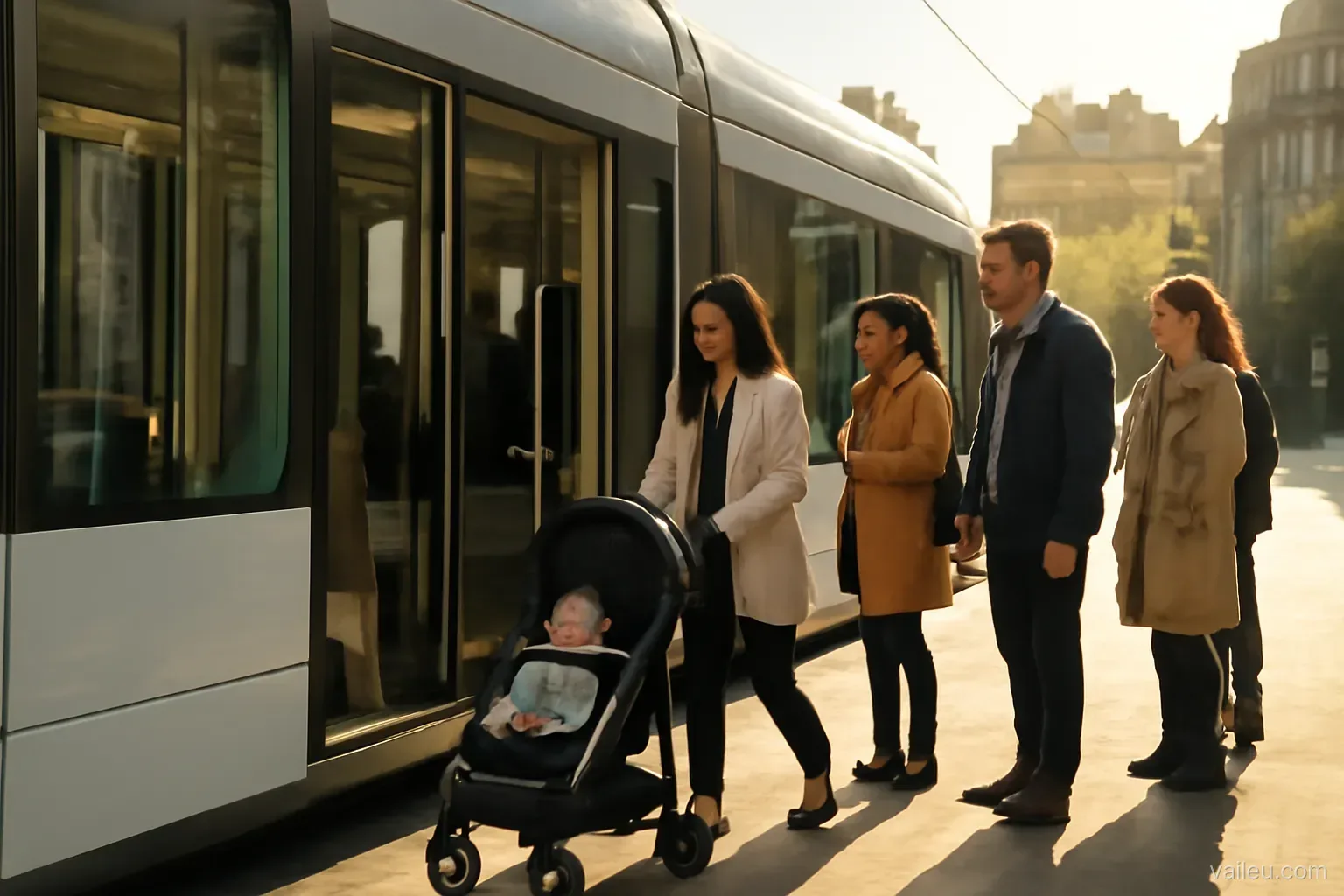
Small courtesies in shared spaces shape much of daily life in Europe: queuing properly, standing on the right on escalators, letting passengers off before boarding, keeping your voice down on public transport and giving up seats to older people, pregnant women and people with disabilities. These rules are rarely written in travel guides, but locals notice them. Get them right and you fit in easily; get them wrong and you may receive irritated looks without understanding why.
Why shared space matters
In many European cities, public spaces — squares, parks, trams — are treated as the community’s shared living room. Everyone is responsible for keeping them pleasant for others. This links to a deeper idea: personal freedom comes with not disturbing other people’s freedom.
Vietnamese people have their own public etiquette, but the crowded, flexible pace of many Vietnamese cities makes it different from Europe’s. Understanding the difference avoids misunderstandings.
Queuing: the art of patience
Queuing is one of the strongest norms in many European countries, especially Britain, Ireland and the Nordic countries. At café counters, post offices, supermarkets and bus stops, people stand in order of arrival. Cutting in is considered very rude, and although the British may say nothing, their displeasure will be obvious.
In some places the queue is invisible: people stand loosely but everyone remembers who came first. In many offices, banks and supermarket deli counters, you take a numbered ticket from a machine. If unsure where the queue is, asking politely “Is this the end of the line?” is the courteous approach.
Escalators and stairs
In many cities such as London, Paris, Vienna and Stockholm, the rule is to stand on the right and leave the left for people walking up. Blocking both sides at rush hour earns some unfriendly “excuse me”s from behind. Some places differ, so watch locals. On stairs, keep right too and do not stop suddenly in the flow.
Boarding trains and buses
- Stand to the sides of the doors and let passengers off before getting on.
- Do not block the doors inside; move in if you are not getting off.
- Take off your backpack and put it by your feet when crowded.
- Give priority seats to older people, pregnant women, people with disabilities and parents carrying small children.
- Keep feet and bags off seats.
- Prams and wheelchairs usually have designated areas; make room.
Keeping quiet
On trams and buses in many northern and central European countries, passengers are silent or speak very softly. Loud phone calls, music without headphones and noisy video calls are seen as disrespectful. Some long-distance trains have quiet carriages where calls and loud talk are not allowed at all. Groups of cheerful Vietnamese friends often speak louder than locals are used to without realising; be mindful of it.
Tickets and the honour system
Many European cities have no ticket barriers on trams and buses. The system relies on trust: you buy a ticket, validate it if required, and inspectors check at random. Travelling without a ticket or forgetting to validate it can bring heavy fines, and “I am a tourist, I didn’t know” is rarely accepted. Learn how to buy tickets via the app or ticket machines as soon as you arrive.
Cycle lanes: take care
In the Netherlands, Denmark, Germany and many other cities, cycle lanes are busy and bikes move fast. The lanes are often coloured, red in the Netherlands for example, and run between the pavement and the road. Tourists walking or stopping for photos in cycle lanes cause many accidents and angry bell-ringing. Look both ways before crossing a cycle lane, just as you would a road.
Walking on pavements
Keep right, do not walk several abreast blocking the way, and do not stop suddenly in the middle of a crowd to check your phone or take a photo; step aside instead. In busy places such as shopping streets and stations, keeping pace with the flow is a way of respecting others.
Crossing the road
In many European countries, cars stop for pedestrians at zebra crossings. But in some, such as Germany, Austria and Denmark, crossing on a red pedestrian light even when the road is empty is seen as setting a bad example, especially in front of children, and can be fined. Wait for the green light.
Parks and green spaces
European parks are for reading, jogging, picnics and sunbathing. General rules: take your rubbish with you or use the right bins, do not play loud music, keep dogs on leads where required and clean up after them, stay off restricted areas and respect children’s playgrounds. Many parks allow barbecues in designated zones; elsewhere they are banned.
Rubbish and eating in public
Littering is seen as very inconsiderate and can be fined. Many cities have sorting bins on the street. Eating on trams and buses is restricted or discouraged in some cities, especially strong-smelling food. In churches, museums and monuments, do not eat or drink outside permitted areas.
Public toilets
In many European countries, public toilets may charge a small fee, so keep a few coins. Toilets in cafés and restaurants are usually for customers. Leave toilets clean and follow instructions for disposing of paper.
Lifts, doors and small gestures
Holding a door for the person behind you, pressing the lift button for someone with full hands, or moving your bag so another passenger can sit are tiny gestures that Europeans notice and appreciate. A quick nod or “thank you” in return completes the exchange. These small moments of mutual consideration are, for many locals, what makes a city feel civilised.
Tips for fitting in
- Watch locals for a few minutes, then follow.
- Learn to say “excuse me” and “thank you” in the local language.
- Keep your voice moderate when in a group.
- Buy tickets before boarding public transport.
- Look carefully before crossing cycle lanes.
- Carry your rubbish until you find a bin.
What to remember
Public etiquette in Europe is not a set of rigid rules designed to trip up strangers but a set of unspoken agreements that let millions of people share crowded cities comfortably. Observe, be patient and think of the person next to you, and you will fit in faster than you expect.
Frequently asked questions
Which side of the escalator should I stand on in Europe?
In many cities, people standing keep to the right, leaving the left for those walking up. Watch locals, as some places differ.
Do people queue at bus stops?
It depends. In Britain and some other countries, orderly queuing at stops is a strong habit; elsewhere people stand loosely but still respect who arrived first.
Can I talk on the phone on trains?
Yes, but keep it quiet and short. In quiet carriages, calls and loud conversation are not allowed.
Is walking in a cycle lane a problem?
It can easily cause accidents. In the Netherlands, Denmark and many cities, cycle lanes are busy and bikes move fast; look carefully before crossing.
Do I need to validate tickets on trams and buses myself?
Many places use an honour system with no barriers, but inspectors check randomly and fines for not having a valid ticket are heavy.