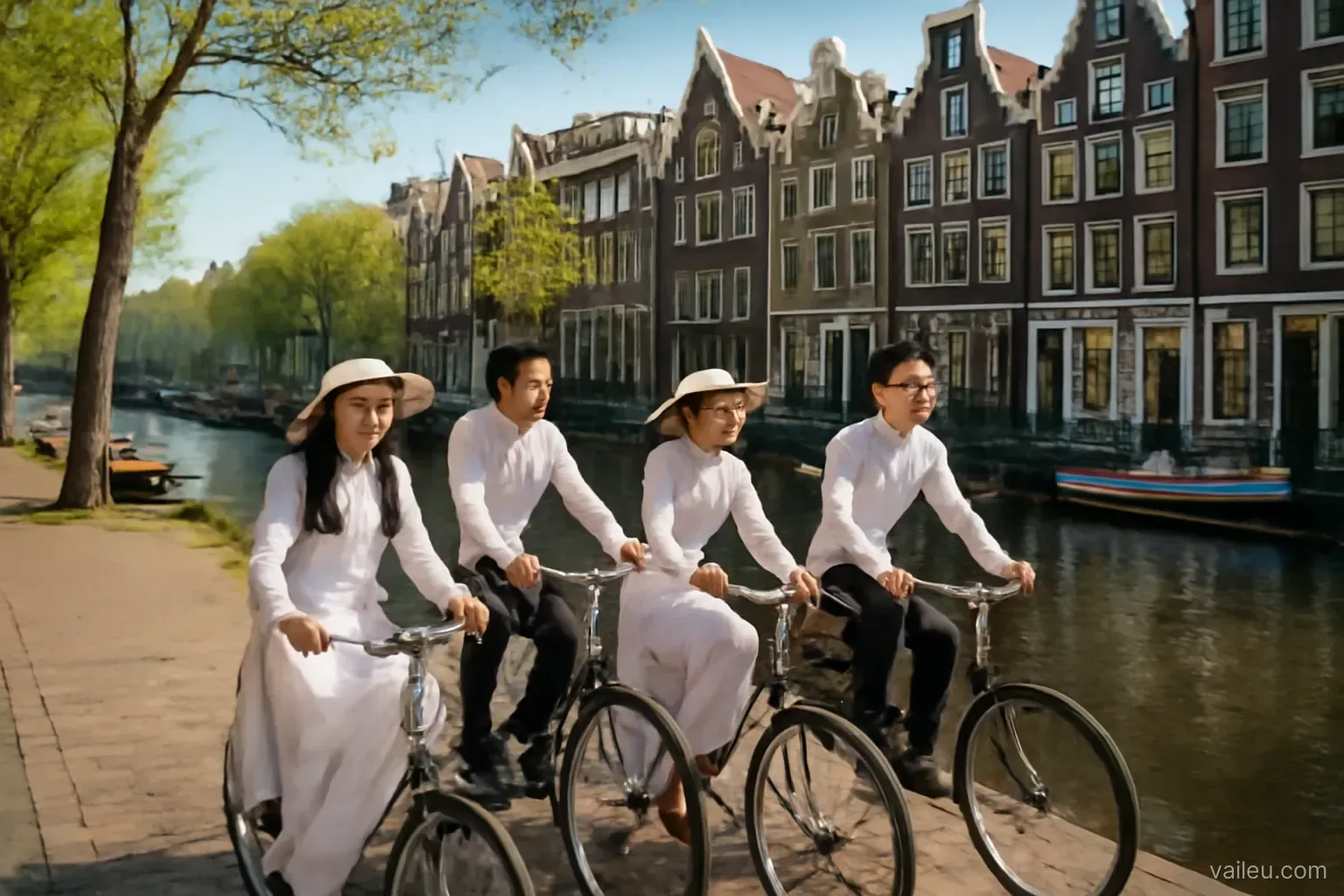
A large part of the Netherlands lies low, some of it below sea level. Over centuries the Dutch built dykes, dug canals and raised windmills to pump water and win land from the sea and rivers. Living with water shaped a practical, cooperative people who speak directly and are devoted to their bicycles. For visitors from river deltas such as Vietnam’s, used to floods and waterways, the Dutch story feels familiar and offers much to learn.
Land made by people
The Dutch like to say that God created the world, but the Dutch created the Netherlands. It is an exaggeration with a basis in fact: many areas were created by enclosing lakes, marshes or shallow seas with dykes and pumping out the water. These reclaimed lands are called polders.
Windmills, the iconic image of the country, were originally used largely to pump water. Modern pumps have taken over, but some windmills are preserved as heritage. Visiting a protected windmill area is a vivid way to understand the country’s long history of water management.
The polder model: cooperate or sink
In a polder, if one person neglects their stretch of dyke, the whole area can flood. People therefore had to cooperate regardless of differences in religion, class or opinion. Water boards, among the oldest democratic institutions in the Netherlands, grew out of that need.
From this comes the term polder model, describing decision-making through discussion and compromise among many parties. At work it shows in meetings where everyone is expected to speak, hierarchies are relatively flat and decisions emerge from consensus.
- Prepare your own view before meetings, because you will be asked.
- Listen and be ready to compromise rather than only defending your position.
- Call colleagues, including managers, by their first names if they suggest it.
- Once a decision is agreed, commit to carrying it out.
Dutch directness
The Dutch are known for directness, sometimes described as the most direct people in Europe. They say what they think, ask straightforward questions and give feedback without detours. A colleague might tell you right away that your presentation is too long or that an idea will not work.
For people raised to soften criticism and protect face, this can be a shock. But the Dutch see directness as honesty and efficiency: speak clearly so that together you can find a better way. They are not offended if you reply equally directly, as long as you are polite and give reasons. Once newcomers understand this, many find communication in the Netherlands simpler and less tiring.
It also helps to know that directness is not the same as rudeness in Dutch eyes. A blunt comment is usually paired with an open attitude to discussion. If you disagree, saying so with arguments is considered a contribution, not a confrontation.
A kingdom of bicycles
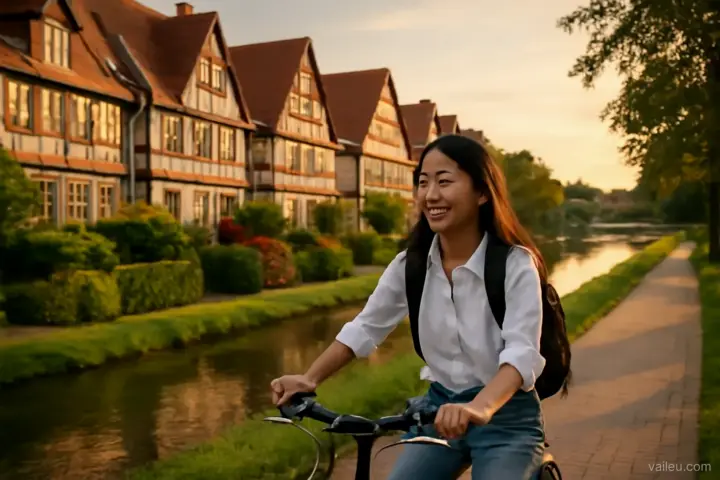
Bicycles are everywhere in the Netherlands. People cycle to school, to work, to the market and with their children; even government ministers sometimes ride to the office. Separate cycle paths, dedicated traffic lights and enormous bike parks next to stations show that the bicycle is treated as a main mode of transport, not an afterthought.
Newcomers usually adapt quickly, but it is important to learn the rules: ride in the right lane, signal turns, switch on lights after dark, do not ride several abreast blocking others and always lock your bike carefully, because bicycle theft is not rare.
- Buy a sturdy second-hand bike and a good lock.
- Learn the traffic signs dedicated to cyclists.
- Carry rain gear, as Dutch weather changes quickly.
- Park only in permitted places to avoid having your bike removed.
Practical and thrifty
The Dutch have a reputation for being practical and careful with money. They value durable, useful things without fuss. Splitting the bill with friends is completely normal. Homes often have large windows with few curtains, partly to let in natural light in a country with many grey days.
Practicality also shows in problem-solving: finding workable solutions rather than debating theory. At university, lecturers tend to value proposals that are applicable and backed by evidence, and students are encouraged to question and test ideas.
Gezellig: warmth the Dutch way
Alongside their directness, the Dutch cherish gezellig, a hard-to-translate word for a cosy, cheerful, pleasant atmosphere of togetherness. A small café full of familiar faces, dinner with friends or an afternoon by the canal can all be gezellig.
This shows that directness does not mean coldness. Once you become friends, Dutch people are warm, often invite you home and treasure shared moments.
King’s Day: a nation dressed in orange
Orange is the colour of the Dutch royal house and has become a national symbol. On King’s Day, celebrating the monarch’s birthday, the whole country dresses in orange, streets turn into flea markets where anyone may sell second-hand goods outside their door, and the canals fill with boats and music. It is a perfect moment to see the Dutch at their most cheerful and community-minded.
Living with water today
Water management remains central to Dutch life. Storm surge barriers, river widening projects and designs that give rivers more room during floods show how the country continues to adapt. The Netherlands has shared its expertise with many delta countries, including Vietnam, in projects related to river deltas and coastal planning.
For visitors interested in engineering or the environment, some flood defence sites have visitor centres that explain how the systems work. They offer a fascinating look at how a nation turns a constant threat into a source of innovation and cooperation.
Many Dutch people also take pride in an international outlook. Trade by sea made the country open to the world for centuries, and today a large share of the population speaks English well, which makes the Netherlands one of the easier places in Europe for newcomers to settle in while they learn Dutch.
Lessons from a nation that lives with water
Perhaps the deepest lesson lies in the spirit behind the dykes: when facing a shared challenge, cooperation and frank discussion work better than everyone looking after only their own patch.
When you visit, rent a bicycle and ride along a dyke between flat green meadows, watching straight canals and distant windmills. You will understand why the Dutch are proud of a country they quite literally built together.
Frequently asked questions
What is the polder model?
A polder is low land surrounded by dykes and kept dry by drainage. The polder model refers to decision-making through discussion and compromise among many parties, rooted in the old need to cooperate to keep the land from flooding.
Why do the Dutch cycle so much?
Flat terrain, short distances, excellent dedicated cycling infrastructure and a habit built from childhood. Bicycles are convenient, cheap and healthy.
Is Dutch directness rude?
It can be surprising at first, but it usually comes with good intentions and targets the issue rather than the person. Once understood, communication feels quick and clear.
What should newcomers know about cycling in the Netherlands?
Use cycle lanes, signal turns with your arm, switch on lights after dark, lock your bike carefully in permitted spots and learn the local traffic rules.
What can visitors learn from the Dutch?
Cooperation to solve shared problems, practicality, a lifestyle built around cycling and the ability to speak clearly while still respecting the listener.