In Europe, bread is not just food but part of regional identity. The French are proud of their crisp baguettes, Germans have hundreds of dense rye breads, Nordic people eat thin crispbreads made from whole grains, Italians enjoy focaccia soaked in olive oil, and sourdough baking is enjoying a revival everywhere. For bread lovers, exploring European breads is both familiar and surprising, and it sheds light on how Vietnam reinvented bread into the beloved bánh mì.
Climate and grain draw the bread map
Europe’s bread map is closely tied to climate. In the warmer south and west, wheat grows well, so light white breads with crisp crusts dominate. Further north and east, where it is colder, rye copes better with frost, so dark, dense, slightly sour breads become staples.
Travel from Paris to Berlin and then Stockholm and you will see bakery counters shift from pale gold to deep brown. Each bread tells a story of soil, harvest and how people adapted to nature over centuries.
The baguette: France’s pride
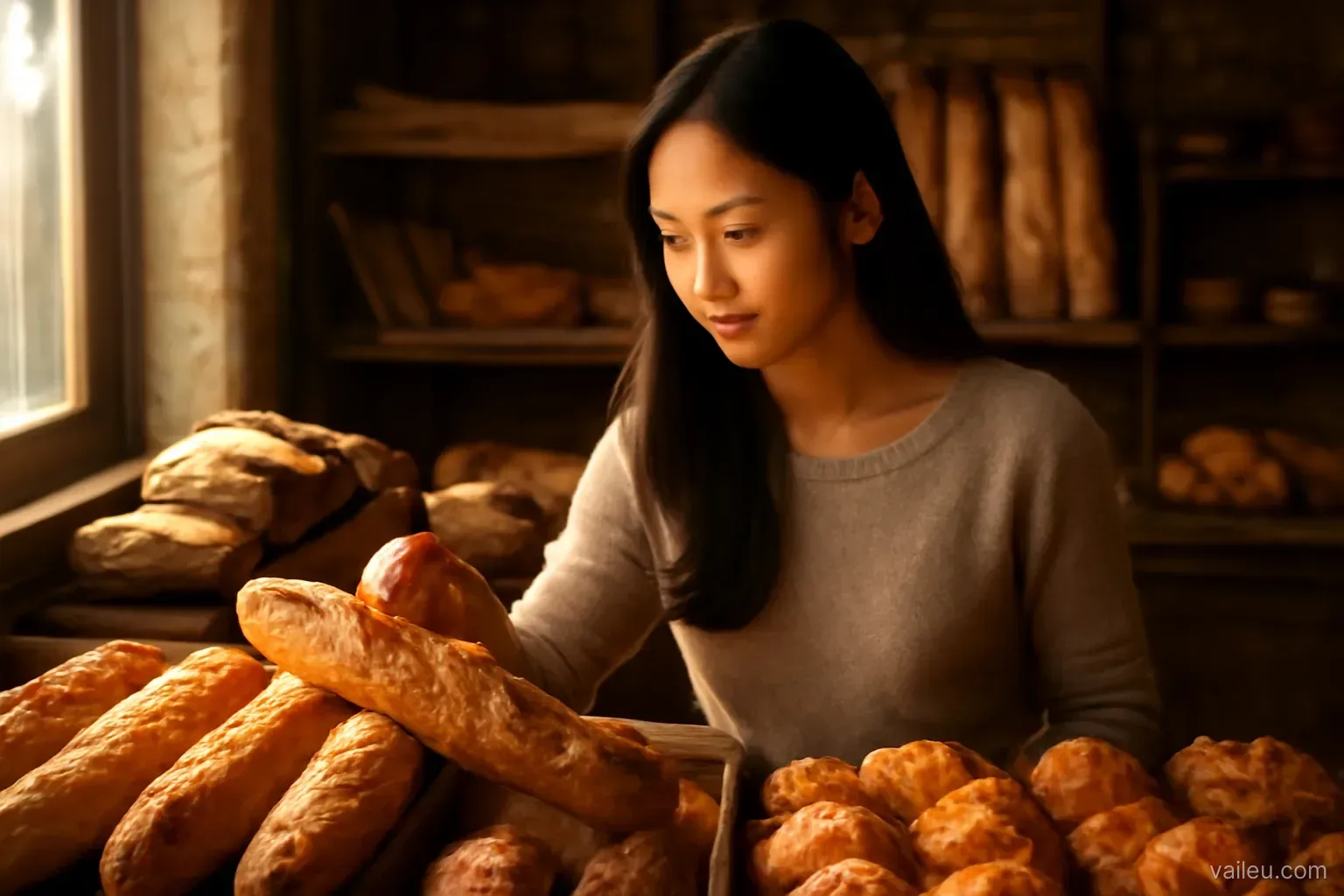
The baguette is a familiar symbol of France: a long loaf with a golden, crackling crust and a white crumb full of irregular holes. The French buy it daily, often in the morning or before dinner, because it is best fresh. The artisanal know-how and culture of baguette bread have been inscribed by UNESCO as intangible cultural heritage.
Many bakeries sell both an ordinary baguette and a traditional one made with a simple recipe of flour, water, salt and yeast. Compare them and you will notice the difference in aroma and crunch. A tip: watch where locals queue in the morning, as a busy neighbourhood bakery is usually a good one.
- Buy in the morning or late afternoon when fresh batches come out.
- Tear it by hand rather than slicing, as many French people do.
- Enjoy it with butter, cheese, soups or sauces.
- Day-old bread can be toasted or turned into French toast.
Dark breads of Germany and Central Europe
Germany has an extraordinarily rich bread culture with hundreds of varieties, and German bread culture is listed in the national inventory of intangible cultural heritage. Rye breads and mixed-grain loaves with sunflower, flax and pumpkin seeds stand out. They are dense, firm, fragrant with grain and slightly sour from fermentation.
A traditional German evening meal, called Abendbrot or evening bread, often consists of a few slices of dark bread with butter, cheese, cold cuts and pickled gherkins. Those used to soft white bread may find dark bread strange at first, yet many who live in Germany end up missing it most when they leave.
Nordic crispbreads and rye
In the Nordic countries, thin rye crispbread is a tradition, originally made to last through long winters. Danes have dense, heavy rye bread used as the base for open sandwiches topped beautifully with herring, eggs, prawns and herbs.
Nordic breads are generally low in sugar, high in fibre and very filling. They reflect the thrifty, practical and nature-oriented lifestyle of cold-climate peoples.
Italian and Mediterranean breads
In Italy, every region has its own bread. Ligurian focaccia is soft and soaked in olive oil, sprinkled with coarse salt and rosemary. Ciabatta has a crumb full of large holes and a thin crust. In parts of central Italy, traditional bread is made without salt, pairing perfectly with the region’s richly seasoned dishes.
In Greece, Spain and Portugal, bread often comes with olive oil, tomatoes and garlic. Catalonia’s toasted bread rubbed with tomato and drizzled with olive oil shows the simple brilliance of Mediterranean cooking.
The sourdough revival
Before commercial yeast, bread was leavened with a starter of flour and water, fermented slowly by natural microorganisms. In recent years young bakers across Europe have revived this method. Sourdough has a thick crust, chewy crumb, gentle tang and complex aroma.
Many artisan bakeries keep their starters alive for years like treasures. Taking a baking class shows why Europeans regard bread-making as a craft demanding patience and respect for time.
A link with Vietnamese bánh mì
Bread arrived in Vietnam during the French period, but Vietnamese bakers reinvented it. Bánh mì has a thin, shattering crust and an airy crumb suited to a hot, humid climate, and it is filled with pâté, cold cuts, grilled meat or eggs, pickled vegetables, fresh herbs and chilli. Today Vietnamese bánh mì is famous worldwide with its own identity.
Many travellers are surprised to find Vietnamese bánh mì shops in large European cities, loved by locals. It is a lovely story of cultural exchange: a food that travelled from Europe to Vietnam and returned to Europe transformed.
Tips for buying and storing bread
- Buy from artisan bakeries to experience local identity.
- Ask the baker which bread suits the dish you plan to eat.
- Store bread in paper or cloth bags so the crust stays crisp.
- Dense loaves can be sliced and frozen, then toasted when needed.
- Do not waste stale bread; turn it into breadcrumbs, toast or bread soup.
Bread and everyday rituals
In many European towns the bakery is a social hub. Neighbours greet each other in the queue, bakers remember regular customers and children are sent to fetch the morning loaf. Sunday mornings often bring a special trip for pastries or a festive loaf, and many holidays have their own breads, from braided Easter loaves to spiced Christmas breads. These rituals show that bread is woven into the rhythm of the week and the year, not just the meal. Joining in, even simply by becoming a regular at one bakery, is a gentle way to feel at home.
A slice, a story
Eating bread in Europe is the simplest and cheapest way to touch local culture. Stopping at the bakery near your home each morning, greeting the baker and choosing a fresh loaf, you are not just buying food but joining a way of life centuries old.
And when you feel homesick, few things comfort more than making your own bánh mì with a European loaf, filled with cold cuts, herbs and pickles. One sandwich, two cultures.
Frequently asked questions
Is Vietnamese bánh mì related to the French baguette?
Yes. Bread arrived in Vietnam during the French period and was reinvented by Vietnamese bakers into a light, thin-crusted loaf filled with local flavours. Today bánh mì has its own identity.
Why are German and Nordic breads often dark?
They use plenty of rye and wholegrain flours from crops that tolerate cold climates. The breads are dense, slightly sour, keep well and are very filling.
What is sourdough?
Bread leavened with a starter made from flour and water, fermented slowly by natural microorganisms instead of commercial yeast. It has a mild tang, a thick crust and a chewy, aromatic crumb.
What should I know when buying bread in Europe?
Buy in the morning for the freshest loaves, ask the baker which bread suits which dish and store bread in paper or cloth bags rather than airtight plastic to keep the crust crisp.
Which breads should visitors try first?
Start with a traditional baguette from an artisan bakery, then try German rye, a sourdough loaf and Italian focaccia. Each offers a completely different experience.