Many European cities are reorganising urban space so that pedestrians, cyclists, public transport and greenery take priority over private cars. Copenhagen is famous for its cycle lanes, Barcelona is experimenting with superblocks, Paris pursues the fifteen-minute city, many historic centres have become pedestrian zones and green roofs are spreading. Walking through these cities offers inspiration for fast-growing cities elsewhere, where pavements, trees and clean air are pressing concerns.
From car cities to people cities
In the second half of the twentieth century, many European cities widened roads for cars, sometimes turning squares into car parks. From the late century onward, many began to change course: returning streets to pedestrians, investing in public transport, building cycle lanes and expanding parks.
The change did not happen overnight and often sparked community debate. But the result in many places is quieter city centres, cleaner air and residents who spend more time outdoors.
Copenhagen and Amsterdam: cycling cities
Copenhagen and Amsterdam are often cited as models of cycling cities. Networks of separated cycle lanes, dedicated traffic lights, bicycle bridges and large station bike parks make cycling the fastest, safest and most convenient way to get around for many people.
Notably, cycling here is not only for sports enthusiasts. Commuters in suits, parents with children and older people all ride. The secret is infrastructure that makes cycling the natural choice rather than a moral appeal.
Barcelona’s superblocks: streets for residents
Barcelona has a distinctive grid of streets. The city has experimented with superblocks: grouping several blocks together, restricting through traffic inside and turning inner intersections into small squares with trees, benches and play areas. Vehicles mostly use the surrounding roads.
Like any major change, the idea was debated at first. Yet it reflects a new way of thinking: streets are not just for traffic but living spaces for residents. Other cities are watching and testing their own versions.
The fifteen-minute city
The fifteen-minute city, embraced by Paris and other cities, aims to let residents reach most daily needs within about fifteen minutes on foot or by bike: schools, shops, health centres, parks, libraries and workplaces.
This requires mixed-use planning, where housing, shops, services and offices are interwoven rather than separated into zones. When everything is close, people rely less on cars, neighbourhoods are livelier and neighbours meet more often.
- Schools and playgrounds near home.
- Markets and food shops within walking distance.
- Health centres and pharmacies in the neighbourhood.
- Parks and green spaces close enough for a daily walk.
- Public transport linking to the rest of the city.
Green roofs, green walls and street trees
Many European cities encourage green roofs, walls covered in climbing plants and more street trees. Green roofs hold rainwater, cool buildings in summer and provide habitat for insects and birds. Street trees reduce temperatures during increasingly frequent heatwaves.
Some cities have even reopened streams once buried in culverts, turning them into green corridors through the city. These projects show that nature can return to cities when given room.
The European Green Capital Award
The EU runs the European Green Capital Award, given each year to a city with strong environmental performance in areas such as air quality, water management, waste, transport and green space. There is also an award for smaller cities.
The award does not declare any city perfect; it encourages effort and the sharing of experience. Winning cities often hold events and launch community projects. If you visit one, look for green-themed walking routes.
Adapting to heat and heavy rain
Green city policies are increasingly about adapting to a changing climate. Heatwaves make dense, paved districts uncomfortably hot, so cities are planting trees, creating shaded routes and opening cool public spaces. Heavy downpours can overwhelm drains, so planners design parks, squares and streets that temporarily store rainwater and let it soak into the ground, an approach sometimes described as the sponge city. Some squares are built to double as shallow water basins during storms and as playgrounds the rest of the time.
These ideas are especially relevant for cities in hot, rainy climates, where shade and flood management directly affect daily life and health.
Experiencing green cities as a student
- Rent a shared city bike and follow the cycle lanes.
- Stroll through pedestrian centres in the evening to feel the atmosphere.
- Visit parks, community gardens and restored riverbanks.
- Use a monthly public transport pass instead of taxis.
- Join city tree-planting or clean-up events.
Ideas for growing cities elsewhere
Every city has its own climate, density, culture and history, so no model can be copied wholesale. Cities in Southeast Asia, for example, have lively street life, many motorbikes, hot and humid weather and high population density. Still, some European principles are worth considering.
These include treating pavements as space for people on foot, expanding and protecting trees, investing in well-connected public transport, designing safe cycle lanes and planning so that schools, markets and clinics are close to homes. Weekend pedestrian streets and new urban rail lines in cities such as Hanoi and Ho Chi Minh City show steps in this direction.
Participation and debate
Successful green city projects in Europe rarely come from planners alone. Residents are consulted through public meetings, pilot schemes and sometimes temporary trials, such as closing a street for a summer to test how it feels. Changes are adjusted based on feedback. This process can be slow and contentious, but it helps projects fit local needs and builds a sense of shared ownership. Visitors can sometimes see these trials in action, with painted streets, temporary benches and planters marking the experiment.
Cities are for living
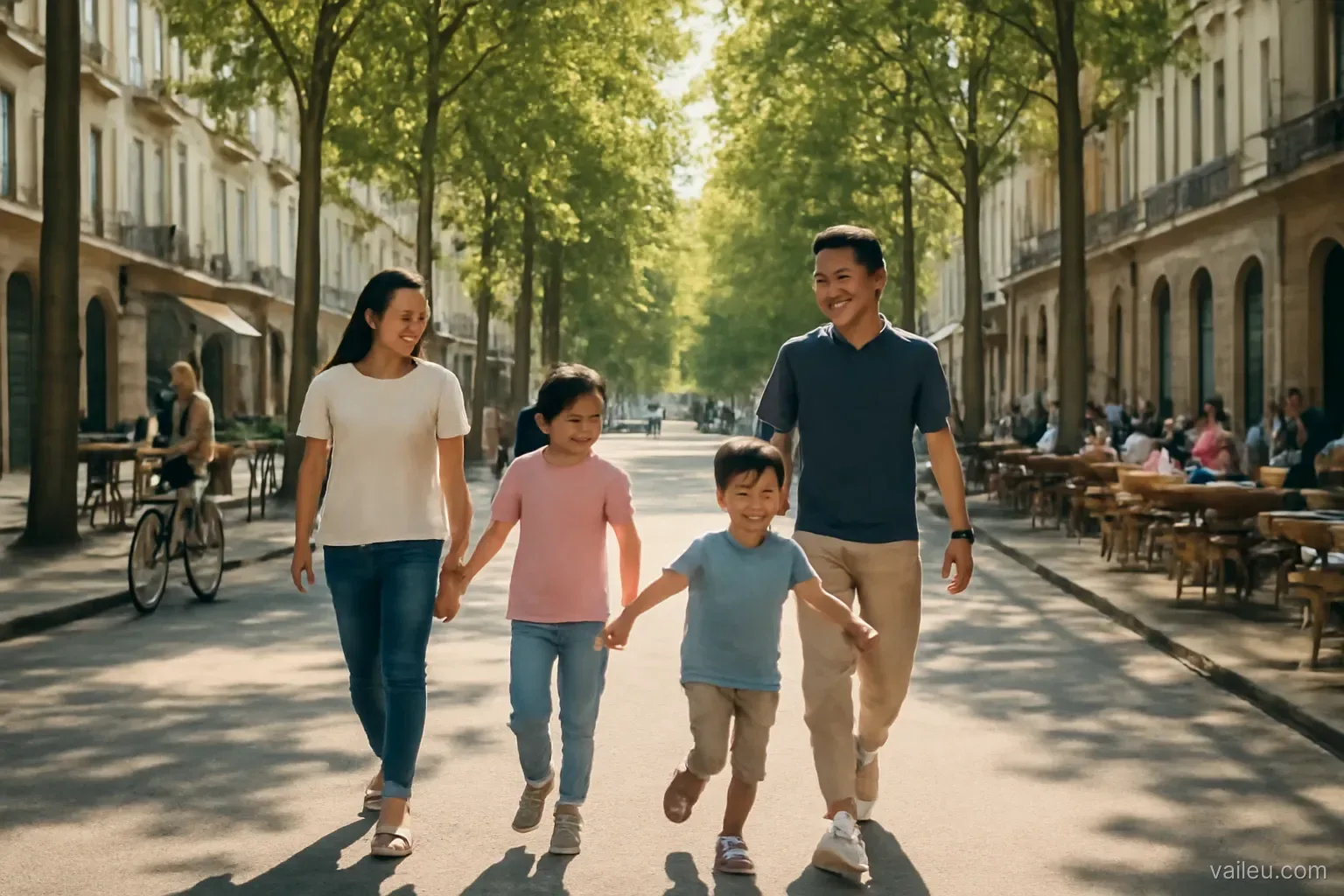
What lingers after travelling through Europe’s green cities is a simple question: who is the city built for? When children can play safely in the street, older people find a bench in the shade and commuters cycle calmly along the river, a city truly becomes a place to live.
Next time you walk through a European square shaded by trees, notice the benches, the water fountains and the absence of traffic noise. Each detail is the result of a choice, and choices can be made anywhere.
Frequently asked questions
What is a Barcelona superblock?
A group of city blocks where through traffic is restricted, inner streets prioritise pedestrians, greenery and play, and vehicles mainly use the surrounding roads.
What does the fifteen-minute city mean?
A planning idea in which residents can reach most daily needs, such as schools, shops, healthcare, parks and work, within about fifteen minutes on foot or by bicycle.
What is the European Green Capital Award?
An award given each year by the EU to a city with strong environmental performance, to encourage efforts and share experience among cities.
Do car-free streets hurt business?
There are often initial concerns, but in many places, when streets become pleasant for pedestrians, footfall in shops and cafés can rise. Results depend on design and implementation.
What can other cities learn?
Give pavements back to pedestrians, expand green space, develop public transport and safe cycle lanes, and plan so that essential services are close to homes.