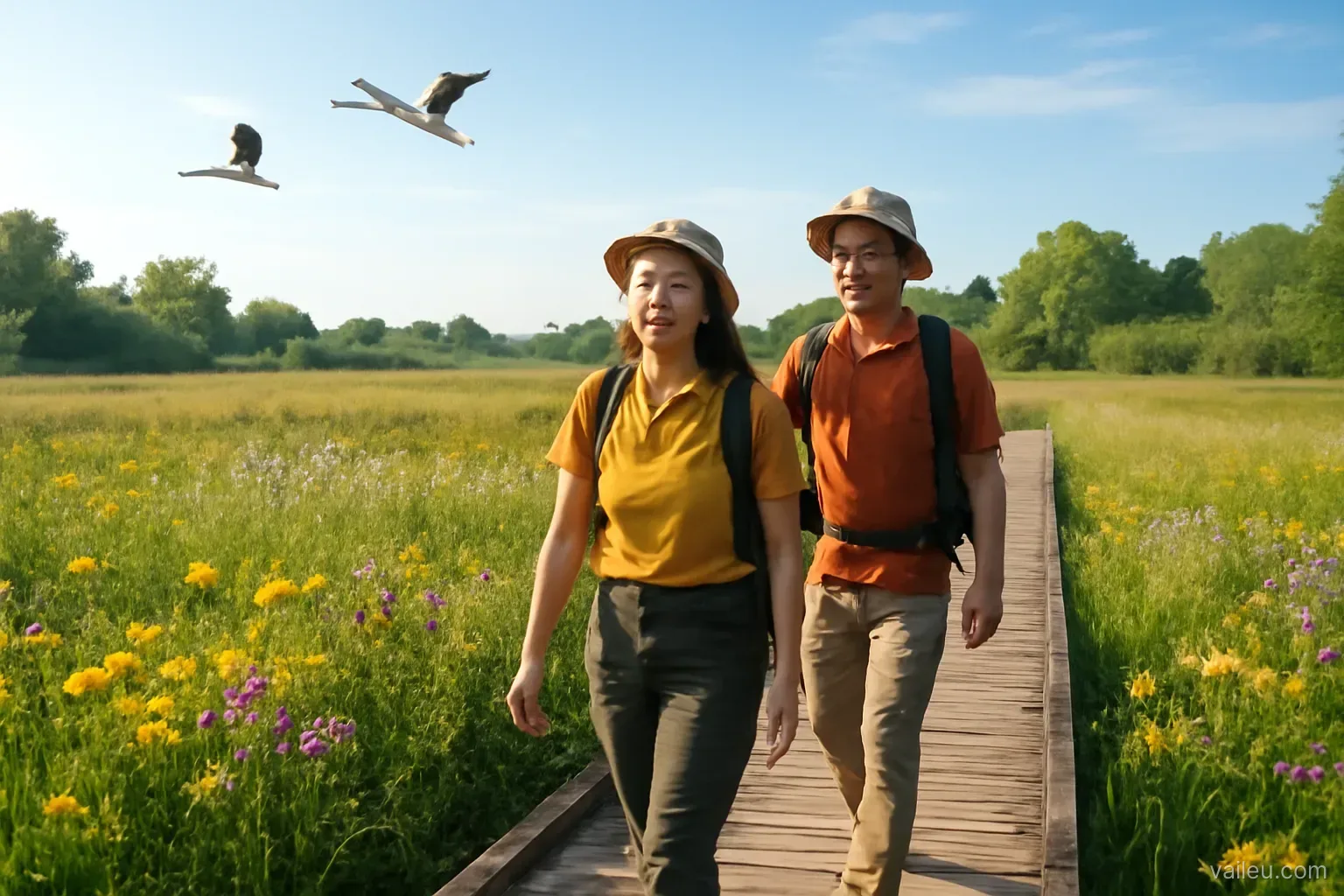
Natura 2000 is a network of protected areas spanning EU member states, created to safeguard the continent’s most valuable species and habitats. Remarkably, most of these sites do not separate people from nature: residents continue to live, farm, manage forests sustainably and travel within them, provided activities do not undermine the natural values. Alongside Natura 2000, Europe is working to restore degraded ecosystems and welcome wildlife back. For nature lovers, it is an inspiring and thought-provoking story.
A network, not isolated islands
Natura 2000 rests on two EU directives: one on the protection of wild birds and another on natural habitats and wild fauna and flora. Each member state proposes important sites, and together they form a network stretching from Finland’s Arctic north to Mediterranean islands, and from land out to sea.
Network thinking matters. Animals do not recognise national borders; migratory birds cross many countries and salmon travel from sea to river. Protecting isolated sites is not enough if they are cut off from one another, so Europe also focuses on ecological corridors connecting protected areas.
- Protecting species and habitats important at European level.
- Each member state manages the sites on its territory.
- Including both terrestrial and marine sites.
- Linked by ecological corridors.
- Human activities allowed when they cause no harm.
Conservation alongside people
Many of Europe’s most beautiful landscapes result from centuries of people living in harmony with nature: traditionally grazed meadows full of wildflowers, moderately managed oak forests, terraced vineyards and marshes where locals fish. If abandoned, some of these landscapes would actually lose diversity.
Natura 2000 is therefore not a fence keeping people out but a framework for living in ways that respect nature. Farmers can receive support to maintain wildlife-friendly practices, such as mowing late so birds finish nesting or keeping hedgerows.
Stories of recovery
After long declines, many wild species are returning to Europe thanks to habitat protection and recovery programmes. Beavers, once nearly extinct in many areas, now build dams on numerous rivers, creating wetlands rich in biodiversity. European bison, the continent’s largest land animal, are conserved in ancient forests such as Białowieża on the border of Poland and Belarus.
Several large birds such as white storks, eagles and vultures have also recovered in many regions thanks to protection of nesting sites and food sources. These stories show nature’s remarkable capacity to bounce back when given a chance.
Restoring nature: the next step
Protecting what remains is not enough, because many ecosystems are degraded. Europe is moving toward restoration: freeing rivers by removing obsolete barriers, recreating wetlands, replanting forests with native trees and restoring grasslands.
The EU has adopted rules on nature restoration, setting targets to restore degraded ecosystems. How they are implemented is decided by each country and remains a subject of public discussion. But the overall idea is clear: not only stop nature’s loss but help it return.
National parks and reserves to visit
Beyond Natura 2000, each country has its own national parks and nature reserves, many with visitor centres, well-marked trails, bird-watching towers and boardwalks across wetlands. They are wonderful places for students to recharge after intense weeks of study.
Many national parks are reachable by train and bus, suiting student budgets. Spring brings wildflowers and migratory birds, autumn turns forests golden and winter offers quiet snowy scenes.
Seas and coasts
Conservation in Europe is not only about forests and meadows. Marine Natura 2000 sites protect seagrass meadows, reefs, sandbanks and the feeding grounds of seabirds and marine mammals. Along many coastlines, dunes and salt marshes are being restored because they shelter wildlife and also act as natural buffers against storms and rising seas. Walking along a protected coast in the Wadden Sea, shared by the Netherlands, Germany and Denmark and inscribed as a UNESCO World Heritage site, visitors can see vast tidal flats teeming with birds, a reminder that some of the richest ecosystems lie where land meets water.
Visiting protected areas responsibly
- Read site rules before you go, especially during nesting season.
- Stay on marked trails to avoid trampling rare plants.
- Do not pick flowers, take stones or catch insects or animals.
- Keep your distance from wildlife and never feed it.
- Keep quiet and use binoculars instead of approaching.
- Take all rubbish home, including fruit peel.
- Do not fly drones where they are prohibited.
Connections with other biodiversity hotspots
Countries such as Vietnam are biodiversity hotspots with many national parks, nature reserves, Ramsar wetlands and UNESCO biosphere reserves, facing challenges such as habitat loss, wildlife trade and pollution.
European experience with network thinking, ecological corridors, support for nature-friendly farming and ecosystem restoration can be a useful reference. Equally, the traditional knowledge of forest communities in Asia and elsewhere offers valuable lessons to the world.
Citizen science
Many European conservation projects rely on ordinary people to collect data. Volunteers count birds in their gardens, record butterflies along walking routes, report sightings through mobile apps or help monitor water quality in local streams. These observations, gathered over years, help scientists track changes in species and habitats. International students can join such projects easily; it is a pleasant way to explore local nature, meet people and contribute to real research at the same time.
Studying and working in conservation
For students interested in ecology, natural resource management or environmental science, many European universities offer specialised programmes with fieldwork in protected areas. Conservation organisations also run volunteering and internship schemes. Check official websites carefully, as conditions and scholarships change each year.
Nature as shared heritage
Natura 2000 reflects a way of thinking: nature is not just one nation’s asset but a shared heritage protected through cooperation. Standing on a boardwalk in a marsh, hearing storks beat their wings overhead, you understand why Europeans are willing to invest so much effort to keep such moments for future generations.
Whether you spend a weekend in a national park or simply notice the wildflowers left unmown along a city road, you are seeing the results of choices made to give nature room. Those choices, repeated across a continent, add up to a living network that everyone can enjoy and help protect.
Frequently asked questions
What is Natura 2000?
A network of protected sites across EU member states, established under EU directives on wild birds and natural habitats to conserve valuable species and habitat types.
Can people live and farm in Natura 2000 sites?
Usually yes. Natura 2000 sites are not always strict no-go zones. Many contain villages, farms and managed forests, provided activities do not harm the natural values being protected.
Are there examples of wildlife recovery in Europe?
Many. Beavers have returned to numerous rivers, European bison are conserved in old forests such as Białowieża on the Poland and Belarus border, and several large bird species have recovered thanks to habitat protection.
What should visitors keep in mind in protected areas?
Stay on trails, do not pick plants, do not disturb animals, take your rubbish home, keep noise down and follow each site’s rules, especially during nesting season.
Where can students study conservation in Europe?
Many European universities offer programmes in ecology, natural resource management and conservation, often with fieldwork. Check official university and scholarship websites.