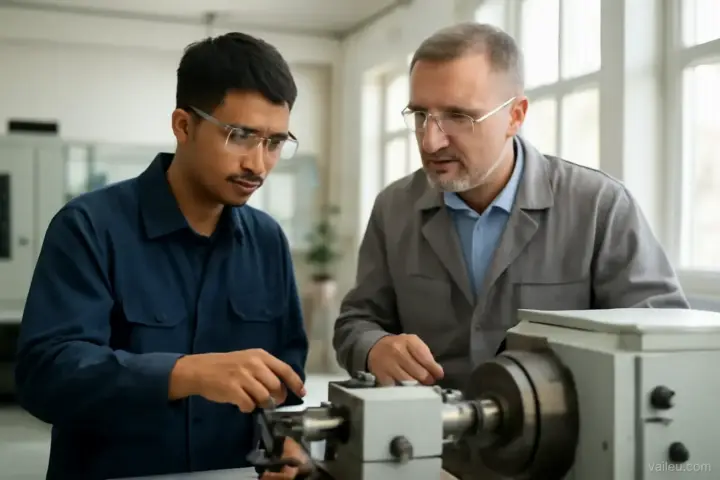
A seminar is a small class in a European university, usually ten to twenty-five students, where everyone reads in advance, presents, asks questions and debates under the guidance of a lecturer. The goal is not to memorise the right answer but to build the ability to reason, weigh evidence and defend a position in front of others.
For many Vietnamese students used to classes where the teacher talks and students take notes, seminars are the hardest thing to adapt to in the first weeks. Understanding how they work and what lecturers expect makes a big difference to your confidence.
How seminars differ from lectures
A European university course often has two parts. Lectures may be large, with the lecturer presenting the main content. Seminars are the small part, where students bring what they have read and heard for deeper discussion. Seminar leaders rarely re-teach; they ask questions, provoke debate, ask students to explain themselves and point out weak reasoning.
That means if you arrive without having read the material, you have almost nothing to contribute, and in a small group this is quickly noticed.
What lecturers really expect
- You have read and understood the main ideas of the assigned texts.
- You have a view of your own, even a tentative one, and can explain why.
- You use evidence from texts or data rather than feelings.
- You listen and respond to classmates instead of only waiting for your turn.
- You can say “I am not sure” or “I have changed my mind” when you hear a better argument.
The last point often surprises Asian students. In European academic culture, changing your mind in the face of a good argument is seen as a sign of mature thinking, not defeat.
Why Vietnamese students often stay quiet
There are familiar reasons. Many worry about making mistakes in English. Respect for teachers makes it uncomfortable to disagree with the lecturer. We are used to thinking we must have a complete answer before speaking. And discussions move fast, with native speakers talking constantly, making it hard to get a word in.
All of this is understandable, but long silence has a cost. Many courses grade participation, and lecturers cannot assess what you think if you never say it. Silence also means missing the most valuable part of the learning.
Preparing for a seminar
- Read with a purpose. For each text, note the main argument, the evidence and one point you find unconvincing.
- Write two short questions or comments in advance. Having a sentence ready makes it easier to start.
- Connect to what you know. Examples from Vietnam are often welcomed because they bring a fresh perspective to the class.
- Skim optional readings if time allows, but prioritise the required ones.
- Review key terms so you do not stumble when you need them.
Tips for speaking when you lack confidence
Speak early, in the first fifteen minutes. The longer you wait, the greater the pressure. Your first contribution does not need to be brilliant; a clarifying question is a contribution too. You can start by linking to the previous speaker: “I agree with you on this point, but the text also suggests that…”. It is polite and shows you are listening.
Speaking slowly and clearly usually works better than speaking fast with many difficult words. Lecturers and international classmates are used to many accents; what they need is to understand your idea.
Disagreeing politely
Disagreement in a seminar targets arguments, not people. Phrases such as “I see it a little differently”, “this evidence could be read another way” and “what would happen if…” are natural openings. When someone challenges you, treat it as a chance to clarify, not an attack.
Debating ideas fiercely and then going for coffee together afterwards is perfectly normal in Europe. Learning to separate ideas from ego is a skill with lasting value.
Seminars and essays go together
Many courses end with an essay rather than a multiple-choice exam. Seminar discussions are the raw material for essays: research questions, opposing arguments, supporting and contradicting evidence. Active seminar participants often write better essays because they have already tested their arguments on others.
European essays also demand clear referencing and strict rules on plagiarism. Learn the citation style your department requires from the start.
Continuous assessment
Many courses spread marks across seminar participation, presentations, short papers and a final essay. This encourages steady work throughout the semester rather than last-minute cramming. Students used to intensive exam revision need to adjust their study routine from week one.
Group work and presentations
Seminars often include group presentations, where three or four students prepare a topic together. Group work in Europe usually means dividing tasks clearly, meeting regularly and giving each member a visible role in the presentation. Speaking up about deadlines and responsibilities early prevents conflict later. If a group member does not contribute, raising it politely with the group first, and then with the lecturer if needed, is considered normal rather than disloyal.
Presentations themselves are judged on clarity and argument rather than on elaborate slides. A short, well-structured talk that answers the question and invites discussion is usually valued more than a long recital of information.
When you disagree with the lecturer
This is the situation Vietnamese students find most uncomfortable. In a seminar, if you have reasons and evidence, offering an interpretation different from the lecturer’s is entirely acceptable and often appreciated. What matters is how you do it: cite your source, explain your reasoning and be ready to hear the lecturer’s response. Some lecturers deliberately present provocative positions to see whether students will push back.
What you take home
A seminar is not just a class format but a view of knowledge: knowledge is built through dialogue, tested against evidence and always open to revision. The skills it trains — critical reading, clear reasoning, listening to opposing views — are useful in any workplace afterwards, including back in Vietnam, where employers increasingly value people who can analyse a problem and explain their reasoning clearly.
Frequently asked questions
How is a seminar different from a lecture?
Lectures are usually large, with the lecturer presenting. Seminars are small groups where students have read in advance and discuss, while the lecturer guides rather than re-teaches.
Is silence in seminars penalised?
Many courses grade participation, so staying silent all term can affect your mark. Check the course outline.
What if my English is not strong?
Prepare a few short questions or comments, speak early in the session and speak slowly and clearly. Lecturers care more about ideas than perfect sentences.
Is challenging the lecturer rude?
In a seminar, reasoned and polite disagreement is encouraged. What to avoid is personal attacks or unsupported claims.
How can I keep up with the reading?
Read with a purpose: identify the main argument, the evidence, a weakness, and write down one question. You do not need to memorise every detail.