Trains are the most pleasant way to travel between many European cities. Stations are usually right in the centre, you need not arrive hours early as at airports, there are no liquid limits, you can stand up and walk around, the scenery rolls by and emissions are far lower than flying. You can buy point-to-point tickets, often cheap when booked early, or use a multi-trip rail pass for flexibility. The choice depends on your itinerary and travel style.
Why trains suit Europe
Europe has a dense rail network built from the nineteenth century and constantly modernised. Cities are close together, so a train journey of a few hours is often as fast as or faster than flying once you count getting to the airport, check-in and waiting. Many European governments encourage rail over short-haul flights for climate reasons.
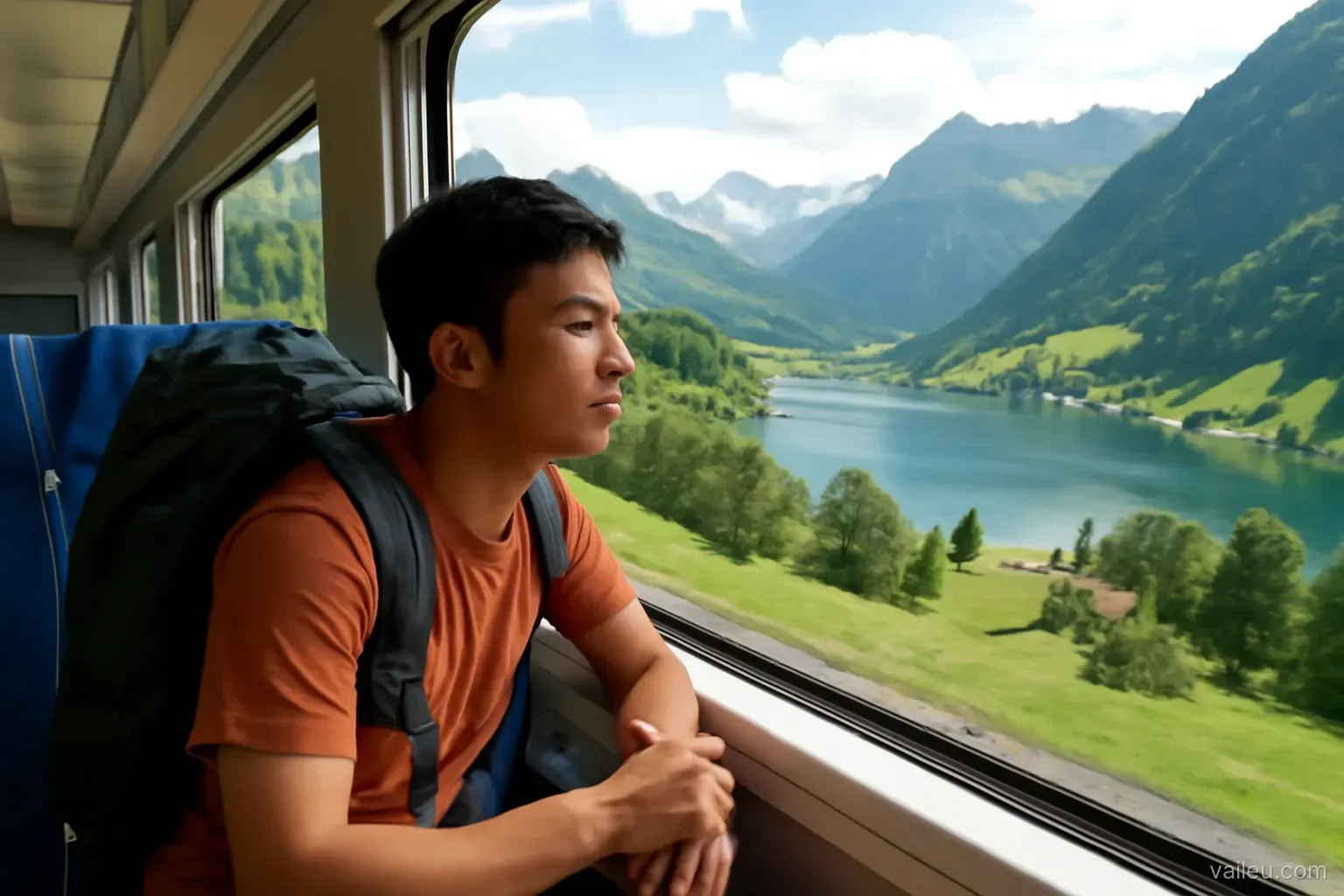
For Vietnamese travellers, trains also show the real Europe: villages, fields, vineyards, snowy mountains and small towns that a plane flies straight over.
Types of train
- High-speed trains: link major cities very fast and usually require reservations, as on the high-speed lines in France, Spain, Italy and Germany.
- Intercity trains: fairly fast, stopping at important cities.
- Regional trains: stop at many small stations, cheap, usually no reservation needed, ideal for exploring the countryside.
- Night trains: couchettes or sleeper cabins, saving a hotel night; being revived on many routes.
- Scenic trains: some famous mountain routes have panoramic glass carriages and need advance booking.
Single tickets or a rail pass
This is the big question. Many railways price single tickets dynamically: the earlier you book, the cheaper, with non-refundable saver fares. If your plan is fixed and you have only a few journeys, advance single tickets are often best value.
A rail pass lets you take many trains within a set number of days. Non-residents of Europe, such as visitors from Vietnam, use the Eurail pass; residents use Interrail. A pass pays off when you take many journeys, use lots of regional trains or want freedom to decide at the last minute. Remember that many high-speed and night trains still charge separate reservation fees. Do the maths for your real itinerary.
Where to buy
Buy directly on the national railway’s website or app, or through reputable booking platforms. Many railway apps provide e-tickets on your phone, which is very convenient. Stations have multilingual ticket machines and staffed counters. Be wary of strangers offering to help at machines; it is sometimes a scam.
Reservations and classes
On many trains, a ticket does not automatically include a fixed seat; you can buy a reservation. First class is roomier and quieter; second class is perfectly comfortable. Some trains have quiet carriages where phone calls and loud talking are not allowed, ideal for working or resting. Look for the symbols on carriage doors.
Validation and ticket checks
In some countries, paper tickets for regional trains must be stamped or validated at a machine on the platform before boarding. Forgetting can count as travelling without a ticket and lead to a fine. E-tickets usually need the code ready when the conductor checks. Conductors may ask for ID matching the name on the ticket.
At the station
- Arrive fifteen to twenty minutes early; big stations can be as large as small airports.
- Check the departure board for your platform, which sometimes appears only shortly before departure.
- Some large stations display carriage position diagrams on the platform so you can stand in the right place.
- Trains are usually punctual and stops are short, so board promptly.
- Watch out for trains that split en route, with carriages going to different destinations; check your carriage number.
Luggage
You carry your own luggage onto the train and place it in racks at the end of the carriage, overhead or between seat backs. No one carries it for you as at airports. Pack compactly and light enough to lift. Keep an eye on your bags, especially at major stations, as thieves may take advantage while doors are open. Locking your case to the rack with a cable is a tip from frequent rail travellers.
Night trains: worth trying
After years of decline, night trains are making a comeback in Europe, linking cities such as Vienna, Munich, Zurich, Paris, Amsterdam, Prague, Budapest and Venice. You sleep on board and wake up in a new city, saving time and a hotel night. There are seats, shared couchettes and private sleeper cabins. Book early, as berths sell out fast.
Beautiful routes to try
- Alpine routes in Switzerland and Austria: blue lakes, snowy peaks and spectacular viaducts.
- The Rhine valley in Germany: castles, vineyards and riverside villages.
- Italian coastal lines: colourful villages on cliffs.
- The Scottish Highlands: wild hills and lochs.
- Norwegian mountain railways: waterfalls and fjords.
Some famous scenic routes are special tourist trains with high prices; regular trains on the same line can be much cheaper with scenery just as good.
Money-saving tips
- Book high-speed trains early for better fares.
- Be flexible; midweek and midday trains are often cheaper.
- Look for youth, group and family discounts.
- Use regional trains for short hops; slower but cheap and scenic.
- Bring your own food; onboard catering is usually expensive.
Delays and cancellations
European trains are sometimes delayed or cancelled due to weather, incidents or strikes. The EU has rules on rail passenger rights, which may include partial refunds for significant delays, depending on conditions. Keep your ticket and ask staff or check the railway’s website on how to claim. If connecting, leave buffer time between trains.
Etiquette on board
European rail travel has its own unwritten rules. Do not put feet or bags on seats when the train is busy, keep phone calls short and quiet, use headphones for music and videos, and offer your seat to older people or parents with small children. If you have reserved a seat and someone is sitting there, show your reservation politely; misunderstandings are common and usually resolved with a smile.
What to remember
Train travel in Europe is not just transport but part of the journey. Choose the right ticket, arrive a little early, watch your luggage and let the window tell you the story of the lands you cross. Many Vietnamese travellers say after their first trip: next time, I will take the train more.
Frequently asked questions
Should I buy single tickets or a Eurail pass?
For a few journeys on fixed dates, advance single tickets are often cheaper. For many journeys and flexibility, a pass may be worth it. Calculate both for your itinerary.
What is the difference between Interrail and Eurail?
Interrail is for residents of Europe; Eurail is for non-residents such as visitors from Vietnam. See official websites for details.
Do I need reservations with a pass?
Many high-speed and night trains require a paid reservation even with a pass. Regional trains usually do not.
What happens if I board without a ticket?
In many countries, travelling without a valid or validated ticket brings a heavy fine. Always buy and, where required, validate your ticket before boarding.
Can I bring large luggage on the train?
Usually yes, with racks at the end of carriages or overhead. Pack compactly so you can lift your own bag, and keep an eye on it.