Living sustainably as a student in Europe does not require big sacrifices. Mostly it comes down to small habits: heating and airing rooms properly in winter, switching off devices, choosing the train over the plane for short trips and buying and cooking just enough to avoid food waste. The best part is that most of these habits also save students a good deal of money, especially when energy prices in Europe run high. Here are practical tips you can start in your first week.
Winter: smart heating
For students from warm countries, a European winter is a new experience. Many flats use wall-mounted radiators heated by hot water, with numbered dials. The higher the number, the warmer the room and the larger the bill if heating is charged separately.
The key is to keep temperatures moderate, wear warm layers indoors and use a thick duvet at night. Close doors to unused rooms, draw curtains at night to keep heat in and open them during the day to let sunshine in. Do not block radiators with furniture or drape thick clothes over them, as heat cannot spread into the room.
- Keep room temperatures moderate and dress warmly indoors.
- Turn heating down when out for long periods or while sleeping.
- Close curtains at night and open them by day.
- Keep radiators unobstructed.
- Tell your landlord about draughty windows or faulty radiators.
European-style airing
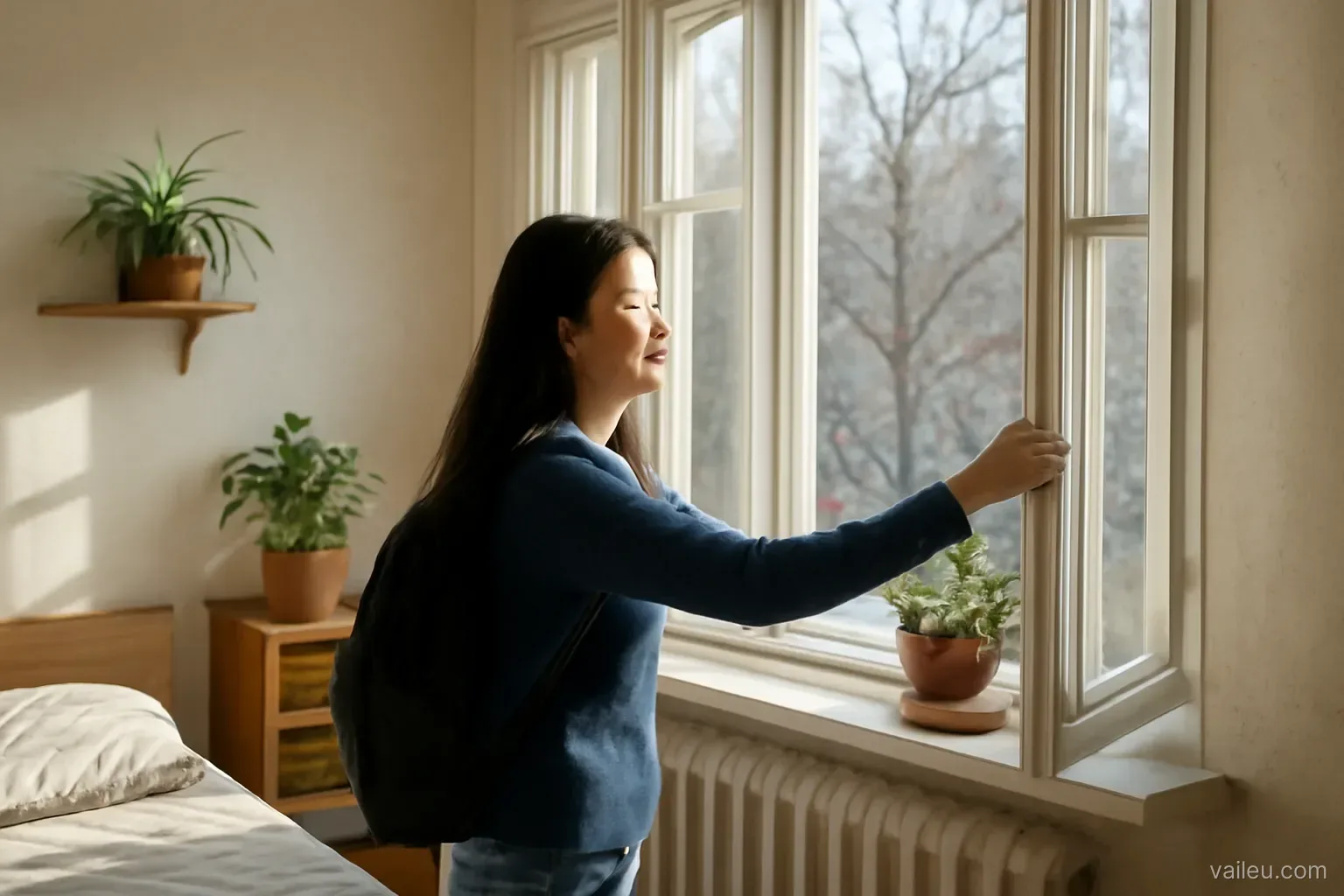
In countries such as Germany, people open windows wide for a few minutes several times a day to replace stale air quickly. This works better than leaving a window ajar all day, because the air is refreshed before walls and furniture cool down. Turn the heating down while airing.
Proper airing is especially important to prevent damp and mould, particularly after cooking, showering or drying clothes indoors. Mould harms health and can cost you part of your deposit when moving out, something many newcomers overlook.
Electricity and water: small habits
- Switch off lights when leaving a room and use energy-saving bulbs.
- Unplug chargers and switch devices off rather than leaving them on standby.
- Wash full loads and use lower temperatures for lightly soiled clothes.
- Air-dry laundry instead of using a dryer if space and ventilation allow.
- Take shorter showers and turn off the tap while soaping.
- Boil only the water you need and cook with lids on pans.
If you rent with separate electricity and water bills, these habits show clearly on your bills. In all-inclusive halls they still help the environment and keep shared costs reasonable.
Trains instead of planes for short trips
Europe has a dense rail network with many high-speed lines linking major cities. For many short and medium routes, rail typically produces significantly lower emissions per passenger than flying. Trains also run from city centre to city centre, sparing you the trip to the airport and security queues.
On the train you can study, read or watch the scenery. Many countries offer youth discount cards and cheaper advance fares, and some night train routes are being revived, saving the cost of a hotel night.
- Check timetables and book early for better prices.
- Look into youth or student discount cards.
- Consider night trains for longer journeys.
- Use long-distance coaches when trains are too expensive.
- When comparing options, include time to and from the airport.
Getting around the city
In the city, walking, cycling and public transport are green and economical. Many cities offer discounted student passes, shared bikes and safe cycle lanes. A good second-hand bicycle may be the best investment of your academic year, paying for itself within months compared with transport fares.
Fighting food waste
Food waste costs money and harms the environment, because all the water, land and energy used to produce that food is lost. Many students already grew up valuing every grain of rice, so avoiding waste comes naturally. In Europe there are extra tools to help.
- Plan a weekly menu and shop with a list.
- Understand labels: best before differs from use by.
- Store fruit and vegetables properly and freeze bread or meat you cannot use in time.
- Cook with leftovers: fried rice, vegetable soup, toasted bread.
- Look for apps or schemes selling surplus food cheaply from shops and bakeries.
- Share extra food with flatmates or through community fridges where available.
Mindful buying
Before buying something new, ask: do I really need it, could I borrow it, buy it second-hand or repair what I have? Good-quality second-hand winter clothes from charity shops are often just as warm and durable as new ones. For textbooks, libraries and older students are excellent sources.
When you do buy, choose durable, repairable items and avoid excess packaging. Carrying a cloth bag, water bottle and container cuts down on single-use plastics.
Spreading the habit
Green living is easier and more fun with others. Flatmates can agree on waste sorting, share household items and cook together to save money. Many universities have environmental clubs, student vegetable gardens and swap events, great places to make friends and learn.
When you return home, these habits can come with you. A returning student who carries a water bottle, sorts waste and cycles can inspire family and friends.
Understanding your energy bill
If you pay energy bills directly, take a moment to understand them. Bills often include a fixed charge and a usage charge, and some providers send annual statements that may result in an extra payment or a refund. Taking meter readings when you move in and out, and checking monthly instalments against actual use, avoids unpleasant surprises at the end of the year. Your university or local consumer advice centre can help if a bill seems wrong.
Green without stress
Green living does not have to be perfect. Nobody can do everything at once. Choose a few easy habits, stick with them and add more over time. Every properly aired room, every train instead of a flight and every meal not wasted is a small but real contribution to the environment, and to your wallet. Start today with one window, one switch and one shopping list.
Frequently asked questions
What does European-style airing mean?
In many countries people open windows wide for a few minutes several times a day to exchange air quickly, rather than leaving them ajar all day. This reduces damp and mould without losing much heat.
Is it fine to keep the heating high and open the window?
No. That is the most wasteful approach. Keep temperatures moderate, turn heating down while airing and close windows while heating.
Is the train really greener than flying?
For many short and medium routes within Europe, trains typically produce significantly lower emissions per passenger than planes. Trains also run city centre to city centre, saving time getting to airports.
How can I reduce food waste?
Plan meals, buy just enough, understand date labels, store food properly, use leftovers creatively and look for apps or schemes selling surplus food cheaply.
Is green living expensive?
Most green habits save money: using less electricity, water and heating, buying second-hand, cooking at home and wasting less. Only some choices, such as organic food, cost more.